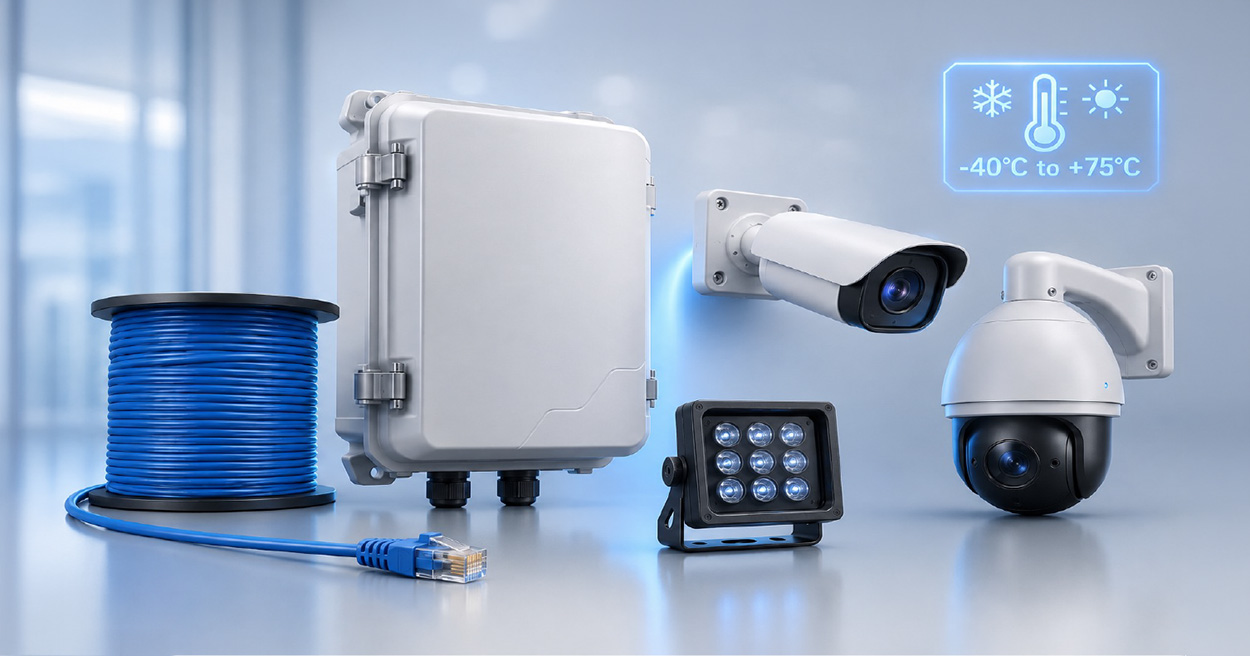
A practical overview of extending Ethernet, IP video, and PoE beyond the standard 100 m / 328 ft copper limit using Unshielded Twisted Pair (UTP).
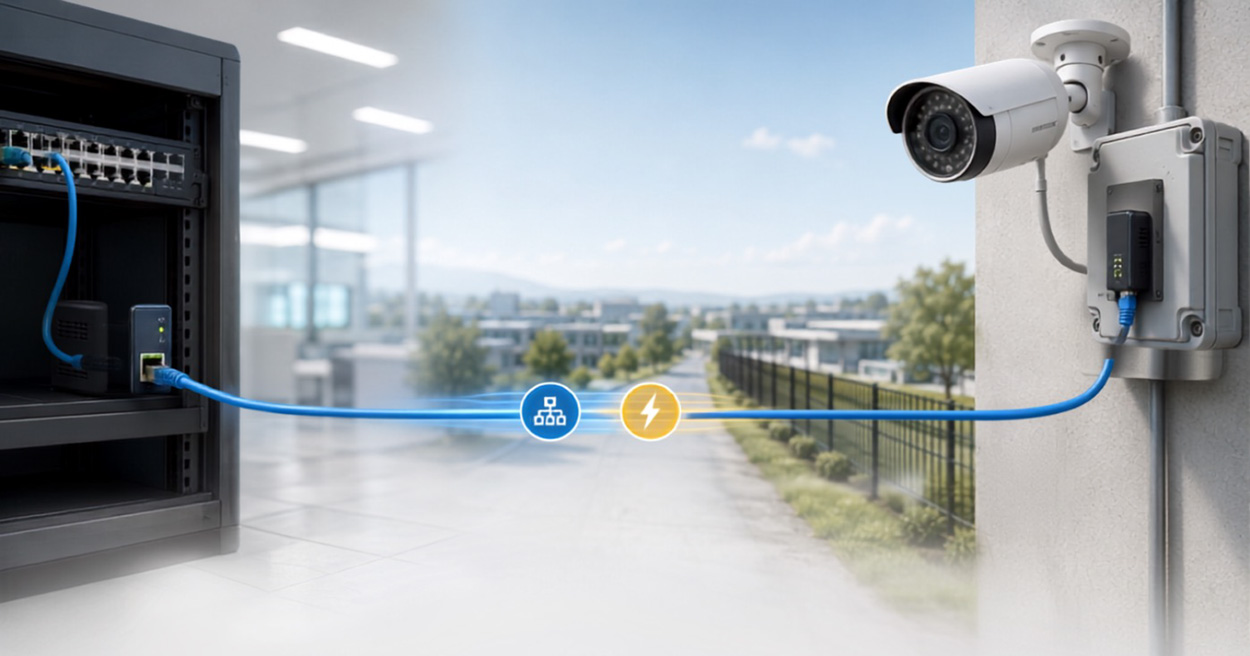
Use extended-distance UTP when:
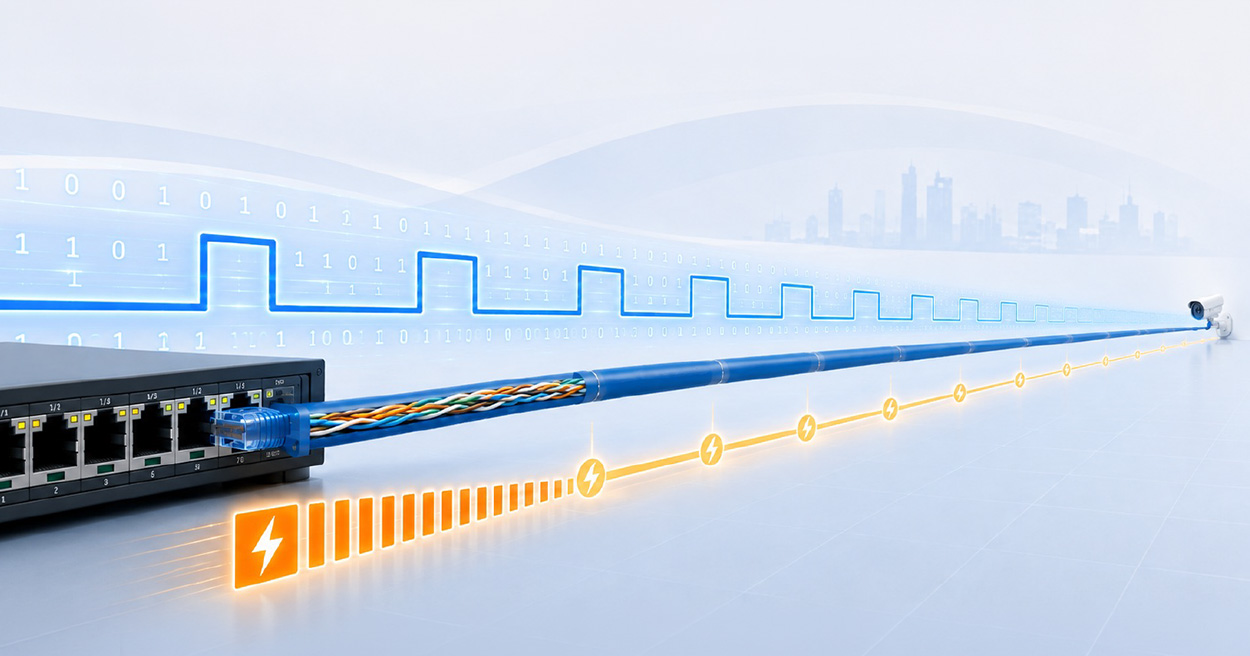
A long-distance UTP link carries:
Ethernet data:
PoE power (802.3af/at/bt)
| Cable | Typical Bandwidth | Common Gauge | Relevance to Extension |
| Cat 5e | 100 MHz | 24 AWG | Common existing cable; widely used for extender applications |
| Cat 6 | 250 MHz | 23 AWG | Higher bandwidth and typically lower conductor resistance |
| Cat 6A | 500 MHz | 23 AWG | Higher bandwidth; useful where future network requirements are important |
An Ethernet extender operates as a point-to-point link, with two endpoint units working together to carry Ethernet and PoE over extended UTP.


Distance + Data rate
Does the extender maintain a rate at a specified distance, or does the rate decrease linearly with distance?
Cable Length
What is the maximum extender reach at a reasonable data rate?
PoE Architecture
Does it use standard PD/PSE conversion or a pass-through PoE architecture?
Delivered PoE Power
Does it provide the required power at the remote device?
Flexible Configurations
Are there multiport models available?
Environmental Requirements
Is it rated for operation in the remote environment?
Maximum distance alone does not define system performance. Review bandwidth and delivered PoE at the required cable length.
Actual performance is shaped by the cable path, device load, and installation environment.